
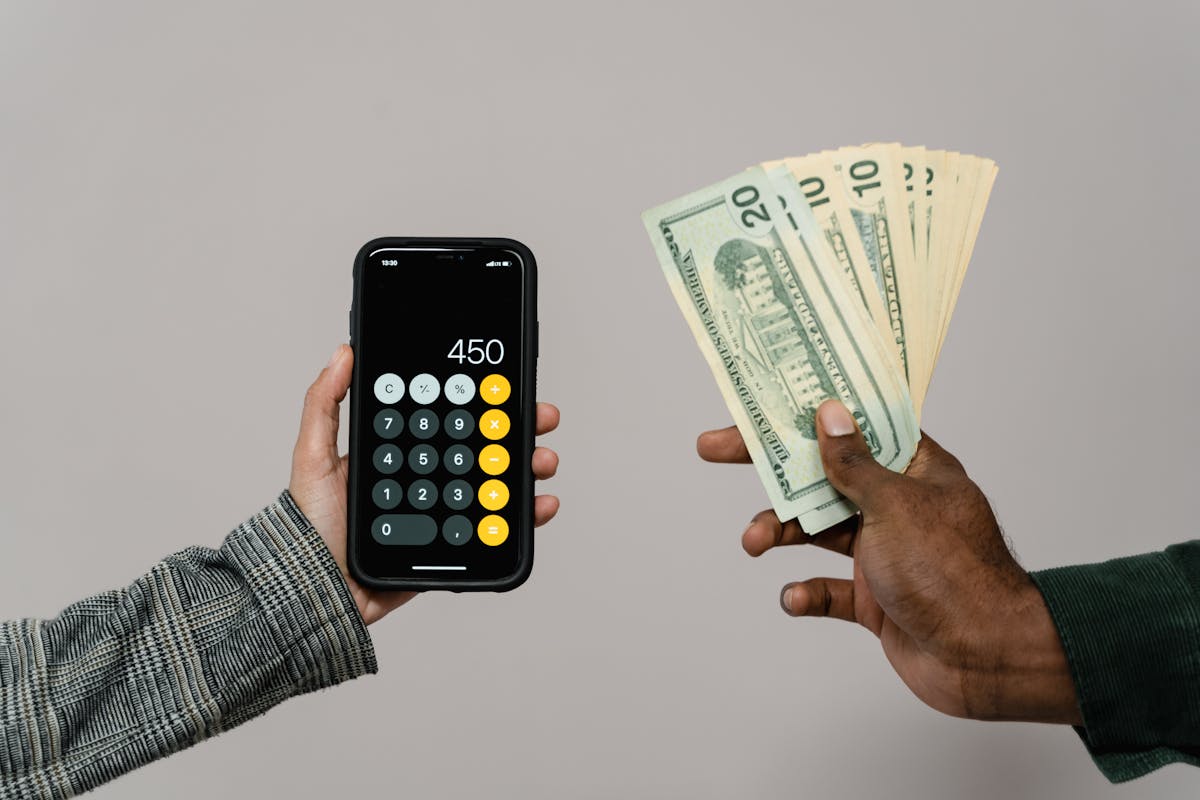
$373 isn't a round number. That specificity is exactly what makes it worth running the math on. Photo via Pexels.
"We challenge YOU to build a $373/Day AI Powered Side Hustle in just 5 days." That's the exact line running across billboards, Facebook ads, and Instagram right now — an oddly specific number that's clearly designed to feel calculated rather than made up. So let's actually calculate it. Is $373 a day realistic, and what would it actually take to get there?
THE ANNUALIZED VERSION OF THE HEADLINE NUMBER — WORTH SEEING WRITTEN OUT IN FULL
Why $373 and Not $500 or $1,000
Oddly specific numbers are a well-known persuasion technique — "$373" reads as more credible than "$500" precisely because round numbers feel guessed and specific numbers feel measured. It's plausible this figure is genuinely derived from an average across a past cohort's results, but it could just as easily be reverse-engineered from a nicer-sounding monthly or yearly total. Both explanations are consistent with the same number, and there's no way to tell which one it is from the ad alone.
Where This Number Likely Comes From
The current ads reference three prior results: $8.9M, $15M, and $31M in tracked earnings across previous times this was taught. If $373/day is meant as an average, it would need to be divided across some number of participants and some timeframe — neither of which is specified in the ad copy. That's the same structural pattern covered in our article on the Summit's overall results: a total is presented, but the group size and timeframe needed to sanity-check the per-person average aren't included.

Hitting a specific daily number requires knowing what's actually being measured first. Photo via Pexels.
What Would $373 a Day Actually Require?
| Business model | What hitting $373/day would look like | Realistic timeline to reach it |
|---|---|---|
| Digital product ($47 price point) | ~8 sales per day, consistently | Months, once an audience or traffic source exists |
| Affiliate content site | Meaningful daily traffic converting at a modest rate | 6–12+ months to build traffic that supports this |
| High-ticket offer ($1,500 price point) | Roughly 1 sale every 4 days | Requires an established sales process and lead flow |
| Freelance/service work | A few hours of billable work daily at a solid rate | Achievable faster, but this is active income, not passive |
None of these are impossible. All of them require an established system — traffic, an audience, or a sales process — that doesn't exist on day one of a 5-day challenge. The "in just 5 days" framing describes when you'd finish building the system, not when the system would be reliably producing $373 a day.
"Build it in 5 days" and "earn $373/day starting immediately" are two different promises. The ad's own fine print — "learn how to generate an income stream" — actually describes the first one, not the second.
How to Evaluate a Daily Income Target Like This
- Check whether the number is described as an average, a best case, or a target — the ad doesn't specify which.
- Notice that "build a $373/day side hustle in 5 days" describes construction time, not the time to reach that income level.
- Run the math yourself against a specific business model rather than accepting the headline figure as a given.
- Remember that oddly specific numbers are a known persuasion technique, independent of whether the number is accurate.
- Compare it to the $8.9M/$15M/$31M figures — if $373/day is an average, the group size and timeframe should be disclosed, and they aren't.
Our verification stance: We could not independently confirm how the $373/day figure was calculated, what population it's averaged across, or over what timeframe. It's a specific, memorable number from the event's own marketing — plausible as an outcome for some participants under some circumstances, but not something to treat as a typical or guaranteed result. Same standing treatment as every other headline number in this cluster.
Frequently Asked Questions
It's mathematically achievable with an established system, but requires traffic, an audience, or a sales process that typically takes months to build, not the 5 days referenced for the challenge itself.
No. The 5-day framing describes the time to build the system during the event, not the time it would take that system to reliably produce $373 in daily income.
It's not explicitly explained in the ad copy. It may be derived from an average across a past cohort's tracked earnings, but the group size and timeframe needed to verify that aren't disclosed.
Specific, non-round numbers tend to feel more credible and calculated than round figures, making them a common persuasion technique in marketing, regardless of the number's underlying accuracy.
Keep Reading
FREE 5-DAY VIRTUAL EVENT • SEP 6–13
Two Self‑Made Internet Millionaires Are Building A $373/Day AI Side Hustle — Live, In 5 Days, From Zero
Russell Brunson and Iman Gadzhi are hosting a free virtual event where they build an AI-powered side hustle from scratch, on camera, step by step — no experience, no showing your face, and no startup capital required. Seats are free but capped, and registration closes once the room fills.
🔒 100% free to attend • 👤 No experience needed • 👹 No camera required
Post a Comment